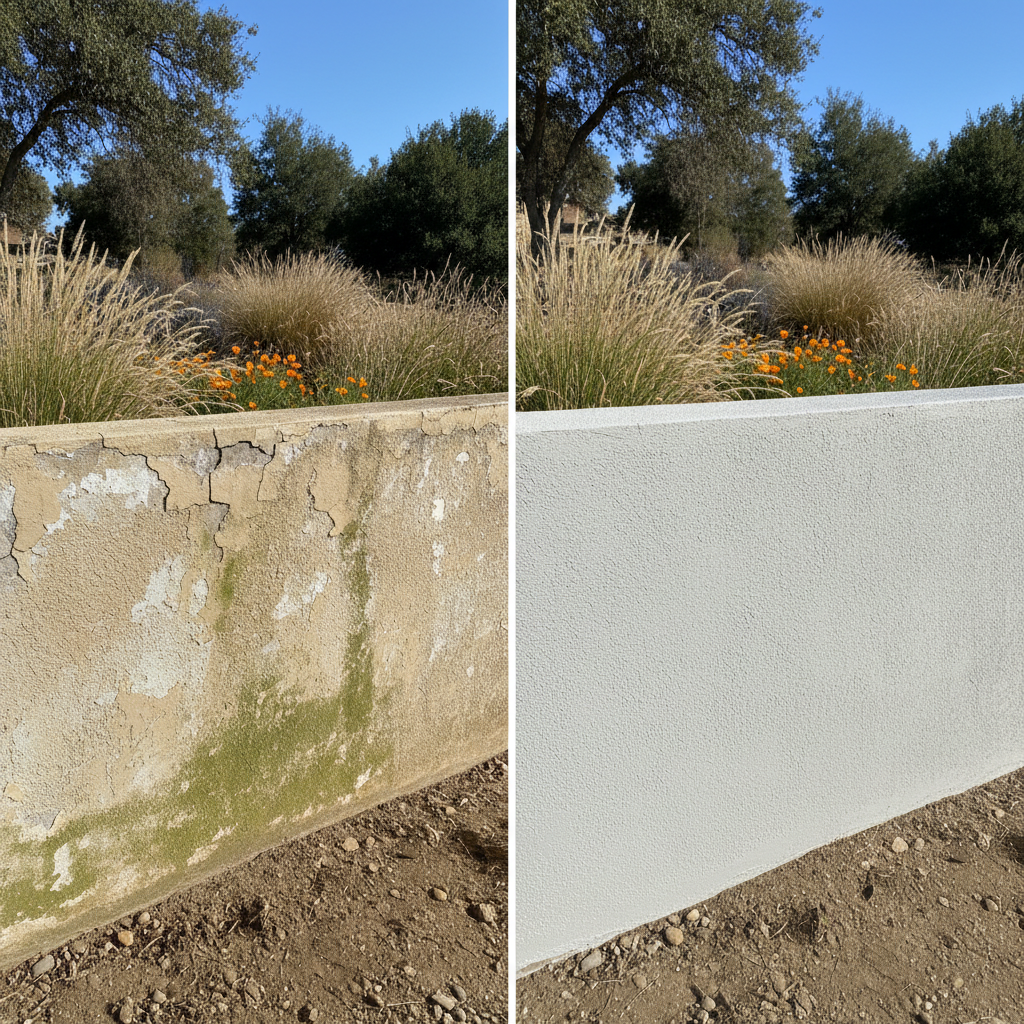
Alright, so you're looking at stucco for your place here in Elk Grove. Maybe you're building new, or you're just doing a big remodel and want to change up the exterior. When it comes to stucco, especially the kind we often see in commercial buildings (which sometimes crosses over to larger residential projects), you've mainly got two big options: the classic traditional three-coat system and the increasingly popular one-coat (or two-coat) systems. People often ask me, 'Which one's better?' Honestly, it depends on what you're trying to achieve, what you've budgeted, and how long you want it to last.
Traditional Three-Coat Stucco: The Old Reliable
This is probably what most folks picture when they hear 'stucco.' It's been around forever, and there's a good reason for that. It’s a tough system that uses three distinct layers applied over a lath and paper setup. First, we put on the scratch coat, which gets scored so the next layer has something to really grab onto. Then comes the brown coat; this builds up the thickness and gives us a smooth, even surface. Finally, the finish coat goes on, giving you the color and texture you want.
- Durability: This stuff is seriously tough. Because it's thicker—usually around 7/8 to 1 inch—it handles impacts incredibly well. You won't easily ding it with a stray basketball or a garden hose, believe me. It also stands up well to our hot Elk Grove summers and those occasional wet winters.
- Moisture Management: Think of traditional stucco as a 'reservoir' cladding. It's designed to soak up some moisture and then let it dry out later. With proper flashing and weep screeds, it manages water just fine, which is especially important with our clay soils that sometimes hold onto moisture.
- Repairability: If it does get damaged, fixing and blending traditional stucco is generally easier. That's because the material is consistent all the way through.
- Cost: Typically, it costs a bit more upfront than one-coat systems. Why? More material, more labor time for all those separate applications, and more drying time between coats.
- Installation Time: It takes longer to put on. Each coat needs time to cure before the next one can go up, meaning more days spent on the job site.
One-Coat Stucco Systems: The Modern Contender
Now, one-coat stucco (sometimes called two-coat, but it's fundamentally different from traditional three-coat) is a newer approach. It's designed to be faster and often more budget-friendly. Instead of separate scratch and brown coats, you apply one thicker base coat that combines those structural and leveling properties. Then, just like traditional, you apply your finish coat.
- Durability: It's still durable, don't get me wrong. But since it's usually a bit thinner (around 1/2 to 5/8 inch) and often uses different admixtures for strength, it might not be quite as impact-resistant as a full three-coat system. Still, it's plenty solid for most homes.
- Moisture Management: Modern one-coat systems are often made to be more water-resistant or even 'barrier' systems. That means they try to shed water instead of absorbing it. This really depends on perfect installation, especially around windows and doors, to stop water from getting in. A good weather-resistive barrier (WRB) behind it is absolutely critical.
- Repairability: Patching can sometimes be a little trickier to blend seamlessly, particularly if the original application wasn't perfectly uniform.
- Cost: Generally, one-coat systems can be a little less expensive than traditional stucco. That's because they use less material and take fewer labor hours. This is often why builders and homeowners, looking to save a few bucks, find them appealing.
- Installation Time: Significantly faster. Since you're only putting on one base coat instead of two separate ones, the whole project takes less time.
So, Which One Should You Pick?
Here's my take, having worked with both for years. If your budget allows for it, and you're looking for the absolute longest-lasting, toughest exterior for your home—especially if you're in an area like some of the older parts of Elk Grove with established trees or kids playing outside—I'd lean towards traditional three-coat stucco. Its thickness and inherent strength are hard to beat, and its proven track record speaks for itself.
However, if you're on a tighter timeline or a slightly more constrained budget, and you're confident you'll get a top-notch installer who understands the nuances of modern systems and proper flashing, then a one-coat system is a perfectly viable and good-looking option. It's still a strong, attractive finish that will protect your home for decades.
The key, no matter which you choose, is the contractor. A poorly installed traditional system will fail just as quickly as a poorly installed one-coat system. Make sure you're working with someone who knows what they're doing, understands our local climate challenges, and stands behind their work. Here at Elk Grove Stucco & Plastering, we've installed both systems and can walk you through the specifics for your particular project. Don't hesitate to ask questions; it's your home, after all, and you deserve to know exactly what's going on it.